The gambler’s fallacy is believing a random result is “due” after a streak. Roulette, coin and slot examples, the 1913 Monte Carlo run of 26 blacks, and why the odds never change.
Gambler’s Fallacy: What It Is, Examples and Why It Fools Us
Quick answer: The gambler’s fallacy is the mistaken belief that a random result becomes “due” after it hasn’t happened for a while, or less likely after it has happened several times in a row. It is wrong because every roulette spin, coin toss and slot spin is independent: after 10 reds in a row, the chance of red on the next European roulette spin is still 18 in 37 (48.65%), exactly the same as on the first spin.
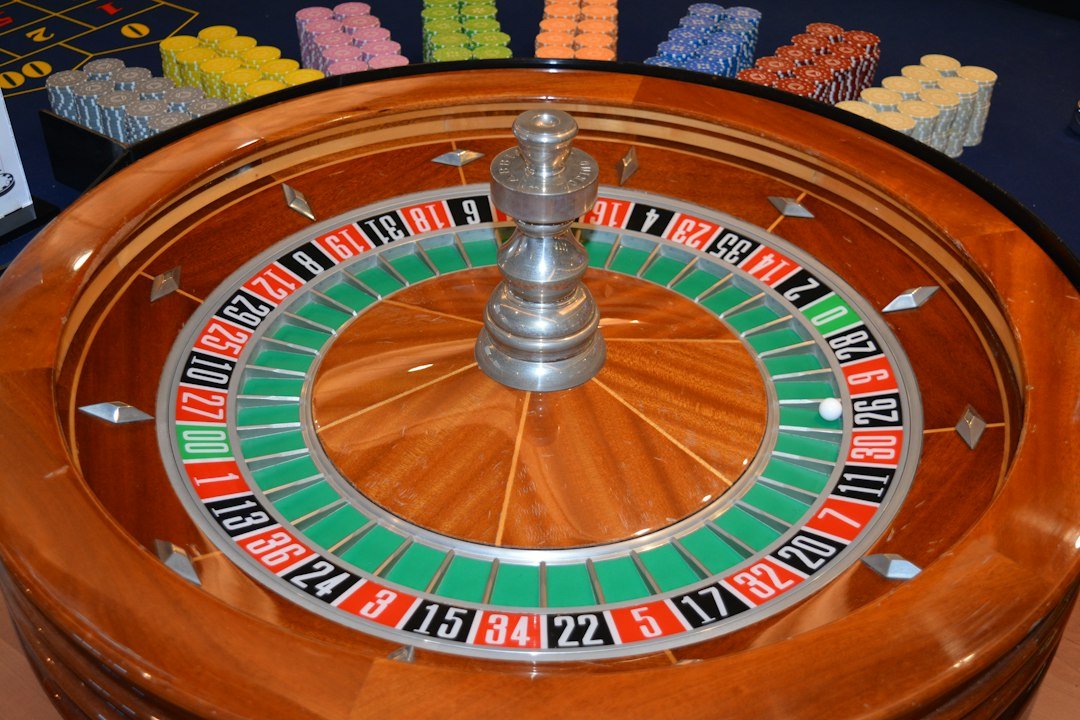
What is the gambler’s fallacy?
The gambler’s fallacy is the belief that if an independent random event has happened less often than expected recently, it is more likely to happen soon, and the other way round. It is also called the Monte Carlo fallacy, after a famous roulette streak at the Monte Carlo Casino in 1913. The key word is independent: a roulette wheel, a coin and a slot machine’s random number generator have no memory, so what happened on the last spin has no effect on the next one.
Typical thoughts that show the fallacy at work are “black has come up eight times, so red is due”, “this slot hasn’t paid for an hour, so it must be close to a jackpot” and “that lottery number came up last week, so it won’t come up again”. Each one treats chance as if it keeps a score and tries to even it out. It doesn’t.
Gambler’s fallacy examples
| Situation | What the fallacy says | The real chance |
|---|---|---|
| European roulette: 10 reds in a row | Black is due | Black is 18 in 37 (48.65%) on every spin, the same as red |
| American roulette: a long run of black | Red must come soon | Red is 18 in 38 (47.37%) on every spin |
| Coin toss: 20 heads in a row | Tails is almost certain | Tails is 50% on the 21st toss |
| Slot machine: no win for an hour | It is about to pay out | Each spin is a new random result; past spins don’t change it |
| Lottery: a number was drawn last week | It won’t be drawn again soon | Every number has the same chance in every draw |
Our roulette odds guide lists the chance and payout of every roulette bet, and how many numbers a roulette wheel has explains where the 37 and 38 come from.
The Monte Carlo fallacy: 26 blacks in a row in 1913
The best-known example happened at a roulette table in the Monte Carlo Casino in 1913, when the ball landed on black 26 times in a row. As the run grew longer, more and more players were sure red was due and bet against black. They lost millions of francs. The wheel had no idea what it had done before: on spin 27, red had the same 18 in 37 chance it had on spin one.
How rare was that run? On a single-zero wheel, the chance of 26 blacks in a row, counted from a given spin, is about 1 in 136.8 million. The chance of 26 of the same colour (all black or all red) is about 1 in 68.4 million. Very unlikely, but casinos spin their wheels millions of times, so rare streaks do turn up. A streak being rare says nothing about the next spin.
Why is the gambler’s fallacy wrong?
Because the chance of a whole streak and the chance of the next result are two different questions. Before you start, 10 reds in a row on a European wheel is a 1 in 1,347 shot. But once nine reds have already happened, the only thing still uncertain is the tenth spin, and that is 18 in 37 like every other spin.
| Reds in a row (European roulette) | Chance of the whole run, before it starts | Chance of red on the next spin |
|---|---|---|
| 3 | 1 in 9 | 48.65% |
| 5 | 1 in 37 | 48.65% |
| 10 | 1 in 1,347 | 48.65% |
| 15 | 1 in 49,424 | 48.65% |
| 20 | 1 in 1,813,779 | 48.65% |
| 26 | 1 in 136,823,184 | 48.65% |
The same goes for a fair coin. Twenty-one heads in a row is a 1 in 2,097,152 event before you start. After 20 heads, though, the 21st toss is simply 50/50. People often expect results to “even out” over a short run, but they don’t: over many thousands of spins the share of reds settles close to 48.65%, not because the wheel makes up for earlier streaks, but because a few streaks barely move the average once the number of spins gets large.
Card games are the one place where the past can matter a little, because cards dealt from a shoe are not put back, so the cards left change the odds slightly. Your own wins and losses still don’t: a losing streak at blackjack doesn’t make your next hand any more likely to win.
Why does the gambler’s fallacy happen?
It happens because people expect even a short run of random results to look like the long-run average. Psychologists Amos Tversky and Daniel Kahneman linked this to the representativeness heuristic: we judge a sequence by how “random” it looks, so red, black, red, black feels more likely than eight reds in a row, even though both exact sequences are equally likely. Researchers call the expectation that small samples will mirror the whole population the “law of small numbers”.
Casino games make it worse because a streak is easy to see and to remember. A losing run also feels like something you are owed back, which is why the fallacy often goes hand in hand with chasing losses. Our guide to casino tricks that keep you playing covers other habits that feed it.
Gambler’s fallacy vs the hot hand fallacy
The hot hand fallacy is the opposite mistake: the belief that a streak will keep going, so a “hot” table or a lucky run should be followed. Both treat past results as a guide to the next independent one, and both are wrong for roulette, dice, coins and slots.
| Gambler’s fallacy | Hot hand fallacy | |
|---|---|---|
| Belief | A streak is about to end | A streak will carry on |
| Roulette example | Eight blacks, so bet red | Eight blacks, so keep betting black |
| Truth for independent events | The next result is unaffected | The next result is unaffected |
The gambler’s fallacy outside the casino
Professionals fall for it too. A 2016 study by economists Daniel Chen, Tobias Moskowitz and Kelly Shue (NBER Working Paper 22026) looked at asylum judges, loan officers and baseball umpires. All three groups were less likely to make the same decision again after a run of identical decisions, even though each case should be judged on its own merits.
Lottery players show it as well: studies have found that fewer people bet on a number for a while after it has been drawn, although it has exactly the same chance as any other number in the next draw.
How to avoid the gambler’s fallacy when you play
- Treat every spin as a new start. The list of past numbers next to a roulette wheel is history, not a forecast.
- Know the house edge. It is 2.7% on European roulette and 5.26% on American roulette on almost every bet, and no streak changes it. Our list of casino games with the lowest house edge compares the main games.
- Don’t raise your stake to win back losses. Betting systems that double up after a loss still face the same edge on every bet, and they can run into the table limit or your budget during a long streak like 1913’s.
- Ignore “due” slots. A slot that hasn’t paid for a while is no closer to a win. Our slot machine myths page explains how random number generators work.
- Set a budget and a time limit before you play, and stop when you reach either one, whatever the last few results were.
New to the jargon? Our gambling terms glossary explains streaks, house edge, RTP and more.
How we checked this
Each fact on this page is checked against at least two independent sources, and we worked out the probabilities ourselves:
- Definition of the gambler’s (Monte Carlo) fallacy: Wikipedia, EBSCO Research Starters and the Medical Journal of Australia (2011).
- Monte Carlo Casino, 1913, black 26 times in a row and players losing millions betting against it: Wikipedia, EBSCO, Medical Journal of Australia and Effectiviology.
- Hot hand fallacy as the opposite belief, and Tversky and Kahneman’s representativeness explanation: Wikipedia and Effectiviology.
- Asylum judges, loan officers and umpires (Chen, Moskowitz and Shue, 2016): NBER Working Paper 22026 and Wikipedia.
- Lottery players avoiding recently drawn numbers: Wikipedia and Effectiviology.
- Each slot spin is independent of the ones before: Wizard of Odds and Wikipedia.
- Probabilities (18 in 37 and 18 in 38 for red, the streak odds in the table, 1 in 2,097,152 for 21 heads, house edges of 2.7% and 5.26%) are our own calculations from the number of pockets on each wheel; the 1 in 68.4 million figure for 26 of one colour matches Wikipedia.
Figures last checked: 8 October 2026. If you notice yourself chasing losses or betting more to make a streak “pay back”, take a break. Our responsible gambling guide lists ways to set limits, and our article on controlling a gambling addiction explains where to get help.
Gambler’s fallacy FAQs
What is the gambler’s fallacy in simple terms?
It is thinking that a random result is “due” because it hasn’t happened lately. For independent events like roulette spins or coin tosses, the past makes no difference to the next result.
What is an example of the gambler’s fallacy?
Betting on red because black has come up 10 times in a row. On a European wheel red is still 18 in 37 (48.65%) on the next spin.
Why is it called the Monte Carlo fallacy?
Because of a 1913 roulette game at the Monte Carlo Casino, where black came up 26 times in a row and players lost millions betting that red was due.
Is a slot machine ever due to hit?
No. Every spin is decided by a random number generator on its own, so a machine that hasn’t paid for hours is no more likely to pay on the next spin.
What is the opposite of the gambler’s fallacy?
The hot hand fallacy: believing a streak will continue. It is just as wrong for independent events.
Does the gambler’s fallacy apply to blackjack?
Your past wins and losses don’t change your next hand, so yes. The cards left in the shoe can shift the odds slightly because dealt cards aren’t put back, but that is about the cards, not about your streak.
Check your local laws before you play
Online gambling laws differ from country to country, and in some places it is restricted or not permitted at all. Before you sign up to any casino listed on UltraGambler, check that online gambling is legal where you live and that the casino accepts players from your country. You must be 18 or older (or the legal gambling age in your country, if higher) to play. Only gamble with money you can afford to lose, and use the deposit limits and self-exclusion tools your casino provides if gambling stops being fun.
Top Online Casinos




18+. T&Cs apply. Check that online gambling is legal where you live.